
If you have ever pushed your bike home because it simply refused to start, you know that sinking feeling. A regular bike service is what keeps that moment from happening, yet it is the one job most riders in Bangalore quietly put off until a faint rattle or a sluggish pickup turns into a real breakdown.
Most breakdowns are rarely bad luck. More often they are the slow result of maintenance postponed until a small, cheap fix grows into an expensive one. Booking professional bike repair services in Bangalore on time keeps your two-wheeler dependable through daily traffic, sudden showers and long weekend rides. This guide covers how often your bike needs servicing, what each service includes, what it tends to cost and how to avoid paying for work it does not need.
How Often Should You Book a Bike Service?
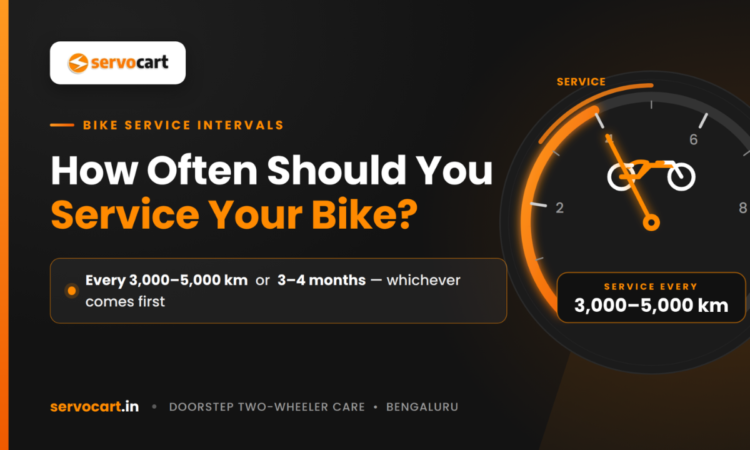
There is no single number that fits every rider, yet a sensible rule of thumb keeps things simple. For most commuter bikes around Bangalore, a bike service every 3,000 to 5,000 kilometres works well, because that window matches how quickly the oil thins and dust settles into the moving parts. If you mostly ride in heavy traffic, on dusty roads or in the rain, lean toward the shorter end of that range.
Bike Service Intervals by Kilometres and Riding Time
Think about servicing in two ways at once: the distance covered and the time since the last visit. Whichever arrives first is your natural cue to book. The rough guide below is one that many riders in Bangalore quietly follow:
- Every 3,000 to 5,000 kilometres for a general check, an oil change and a look at the moving parts
- Once every three to four months even if the bike is barely ridden, because oil ages with time as well as use
- Just before and just after the monsoon, when moisture and road grime build up fast
- Ahead of a long ride or a trip out of the city, which keeps small faults from becoming a breakdown
Why New Bikes Need a Tighter Schedule
A new bike needs extra attention early on. Because the engine is still bedding in, the first service usually falls around 500 to 750 kilometres or within the first month, with the next few visits close together before easing into the regular rhythm. Following the owner manual through this running-in period protects the engine for years. It is worth reading what a standard service covers so nothing catches you by surprise.

What a General Service Actually Covers
When you book a bike general service, a good technician works methodically through the parts that keep you safe and your ride smooth. Knowing the checklist helps you tell a thorough job from a rushed one that skips the details:
- An oil change plus cleaning or replacing the oil filter for proper lubrication
- Air filter cleaning so the engine breathes freely and burns fuel efficiently
- Chain cleaning, lubrication and correct tension adjustment for smoother power
- A full brake inspection at the front and rear, including pad wear checks
- Clutch and accelerator play adjustment, plus a battery health check
- Tyre pressure and tread inspection, then a general tightening and a short test ride
If the battery keeps dying overnight or the terminals look corroded, the ServoCart guide on bike battery maintenance covers the checks that are safe to try at home. For faults deeper inside the engine or the electrical system, a trained technician is the safer and more cost-effective choice.
What Professional Bike Repair Services Cover
Servicing keeps a healthy bike healthy, while repair work brings a struggling one back to life. Professional bike repair services go beyond routine maintenance to diagnose and fix the specific faults that leave a two-wheeler unsafe or unreliable. A well-equipped workshop handles most of them under a single roof, which saves you chasing different mechanics for different problems:
- Engine repairs such as oil leaks, worn piston rings, overheating or a loss of power
- Electrical repairs covering the battery, the self-start, the wiring, the indicators and the headlights
- Brake repairs including pad replacement, brake fluid top-up and fixing a spongy lever
- Clutch and gear repairs for slipping, hard shifting or a dragging clutch
- Suspension and fork work for a bumpy, unstable or leaking front end
- Puncture repair, tyre replacement and wheel alignment for safer handling
Some faults strike far from any garage. A quick read of these roadside bike repair tips helps you handle a minor breakdown calmly until a technician is able to take over.
Doorstep Bike Repair and Genuine Parts
Quality bike repair no longer means pushing a dead machine to a distant garage. With doorstep repair, a trained technician arrives at your home or office with the tools and common spares for most jobs, which is a real relief when the bike will not start on a busy morning. Insisting on genuine parts and a clear warranty matters as much as the repair itself, because a cheap spare that fails within weeks costs far more than doing the job right the first time. When the fault is beyond a roadside fix, you can book online bike repair and service and bring that expertise to your door.
Signs Your Bike Needs a Service Sooner
Sometimes a bike signals trouble well before the date you pencilled in. Reading those early signs saves both money and stress. Treat them as gentle warnings worth acting on the moment they appear:
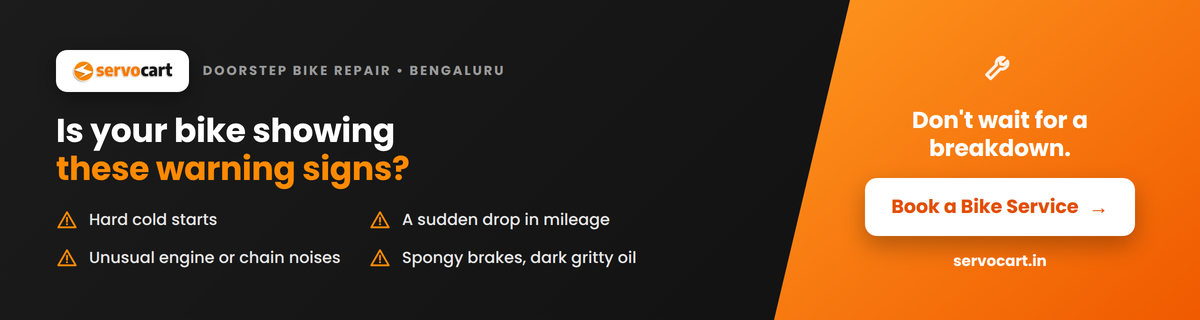
- Starting trouble in the morning or a sluggish, hesitant pickup
- A noticeable drop in mileage with no obvious explanation
- Unusual noises from the engine, the chain or the brakes
- Spongy brakes or a lever that travels much further than before
- Dark, gritty engine oil sitting on the dipstick
- Vibrations or a wobble at speed that was not there before
Worn tyres deserve a special mention, because they quietly cause many accidents on wet Bangalore roads. If the tread looks low or the rubber is cracking, reading up on choosing the right tyre early is far cheaper and safer than a sudden scare on the highway.
How Much Does a Full Service Cost?
Cost comes up in nearly every conversation about servicing. The full bike service cost depends on your bike model, the parts that genuinely need replacing and the labour the job involves. A basic general service stays light on the wallet, while a full service with new filters, brake pads or worn cables naturally costs a little more.
As a rough guide, a general service sits at the affordable end, while a comprehensive one with several part replacements sits higher up. Before you commit, it is worth seeing how much a service costs for different jobs. That way the final bill arrives without any nasty shocks.
Quick Bike Service vs Full Service: Which One Do You Need?
Not every visit to the workshop needs to be a big, drawn-out affair. A quick service is a lighter, faster option for riders who keep up with maintenance and simply want to stay on top of the essentials between the larger jobs, which makes it ideal as a mid-cycle top-up. Here is a simple way to decide which one your bike is asking for:
- Choose a quick service for a fast oil change, a chain clean and a safety once-over
- Choose a full service when the bike is due for new filters, brake work or major parts
- Choose a full service before a long trip or right after the monsoon season
Conclusion
Servicing a bike was never about spending more than necessary. It is about spending wisely, because a small, planned cost today prevents a large, unexpected one tomorrow. A sensible schedule, attention to the warning signs and a few small jobs at home keep almost any two-wheeler dependable, with smoother rides, steadier mileage and fewer breakdowns. The same care applies to a regular car service for anyone who also runs a car.
Ready to keep your two-wheeler in good shape without the guesswork? You can book a bike service with the ServoCart team and have a trusted technician take care of everything at a time that actually suits your day.
